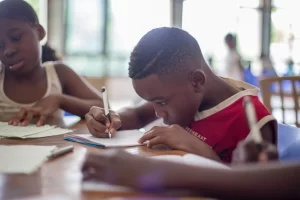
The start of a new school year can feel exciting, but for many children, it’s also a time of stress and uncertainty. New teachers, unfamiliar routines, and changing environments can leave kids feeling unsettled—sometimes in ways that are hard to articulate.
Think about starting a new job with a new boss. You’re unsure of their expectations, how they communicate, what they value, and how they respond to mistakes. That discomfort—the tightness in your chest, the second-guessing, the mental exhaustion—is exactly what many children feel when they walk into a new classroom. They’re trying to figure out how to fit in, how to succeed, and how to be understood.
For kids, this can show up as confusion about assignments, anxiety over grading, or uncertainty about what a teacher’s instructions really mean. A simple comment like “make sure your work is neat” might leave a child wondering if their handwriting is good enough, or if they’ll be penalized for crossing something out. Not knowing how a teacher gives feedback or what “participation” looks like in this new setting can add layers of stress that impact learning and behavior.
This is where parents play a powerful role. By opening up communication with your child’s teacher early on, you help bridge that gap. Sharing insights about your child’s personality, learning style, or emotional needs gives the teacher a head start in building rapport. It also helps your child feel seen and supported, which can ease anxiety and foster a stronger connection in the classroom.
Transitions are tough, but they’re also opportunities. When we tune into what our kids are experiencing and work collaboratively with educators, we create a foundation for trust, growth, and resilience—one conversation at a time.